Dog Daycare
Sit. Stay. Nap. Play.

DOGGY DAYCARE
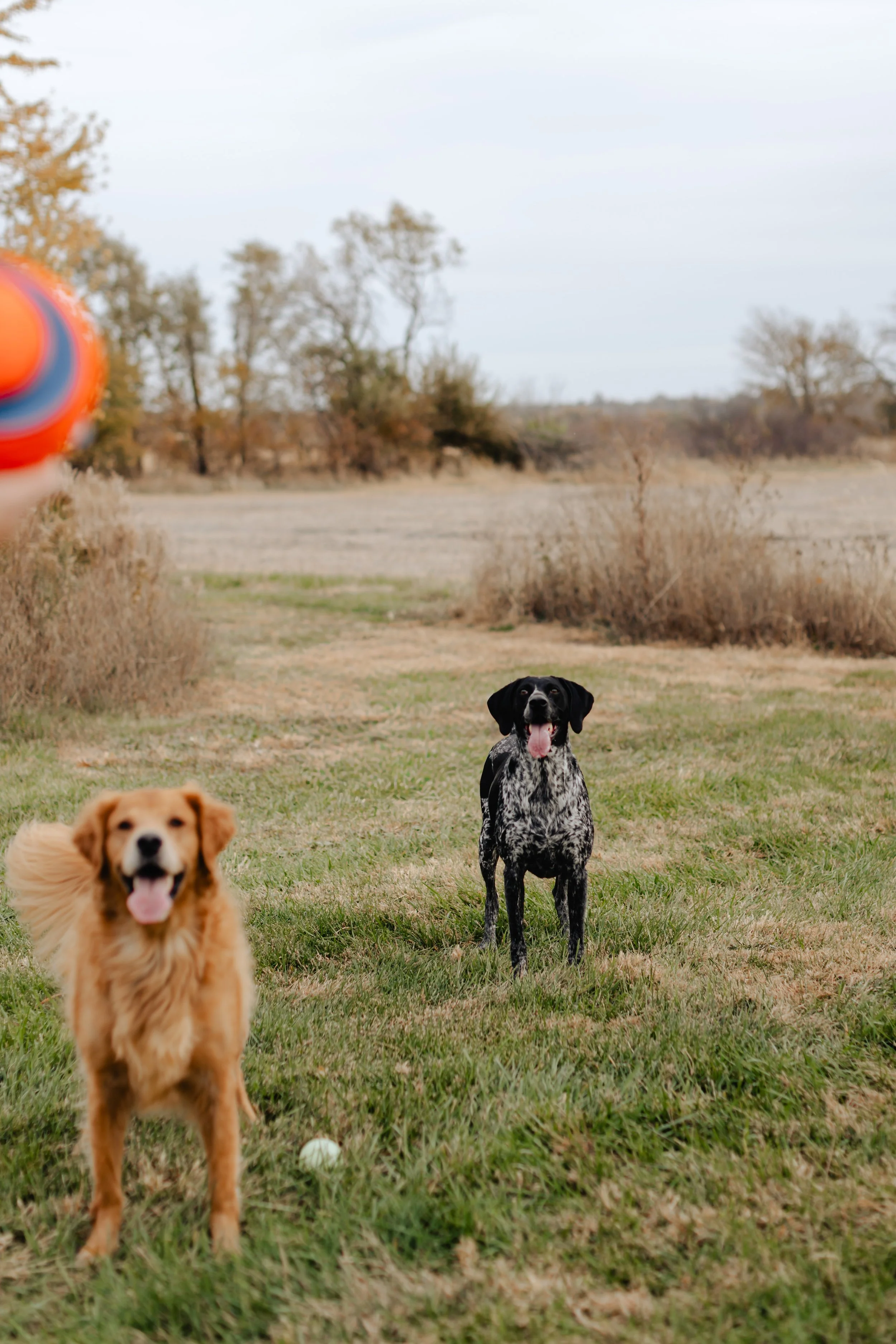
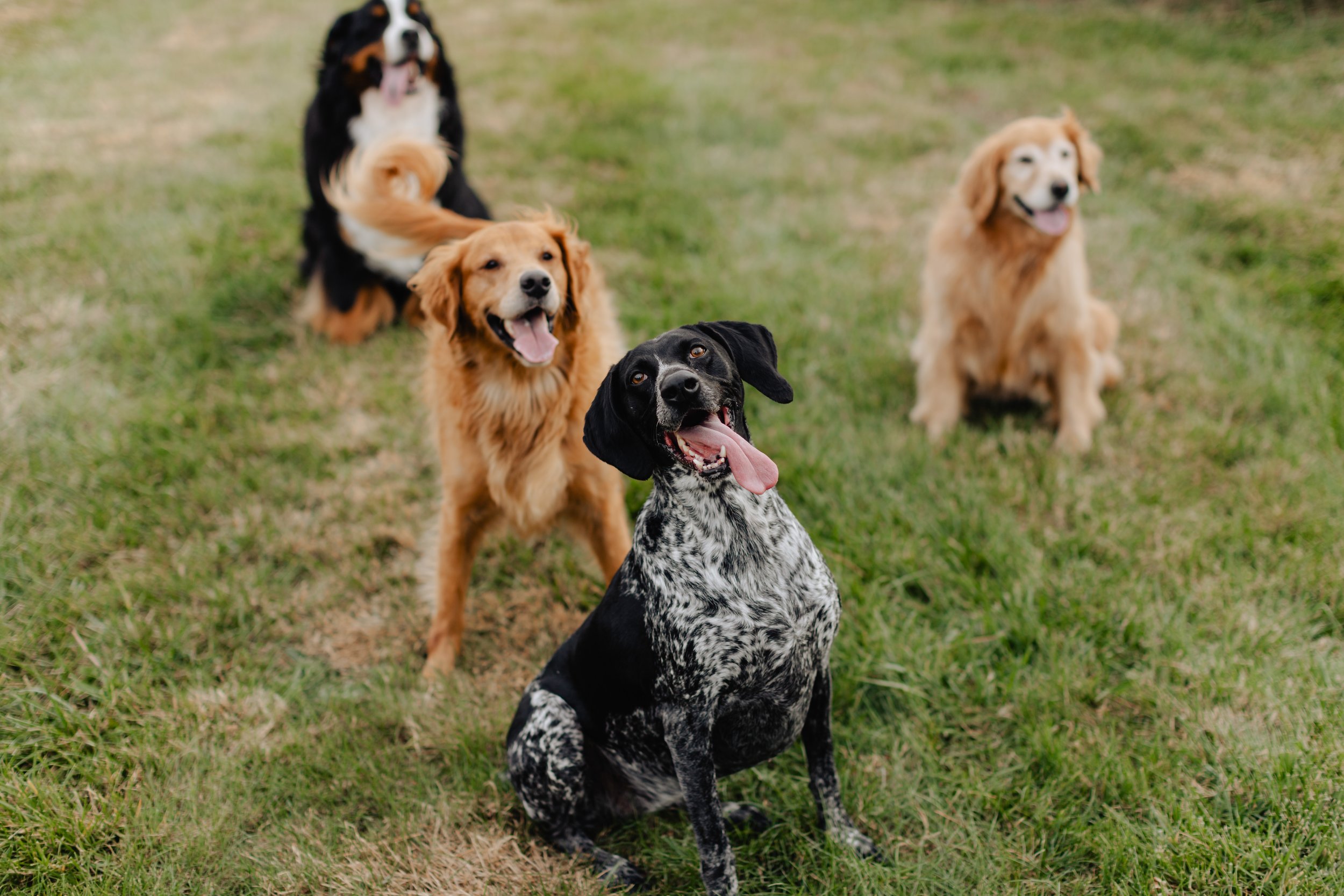
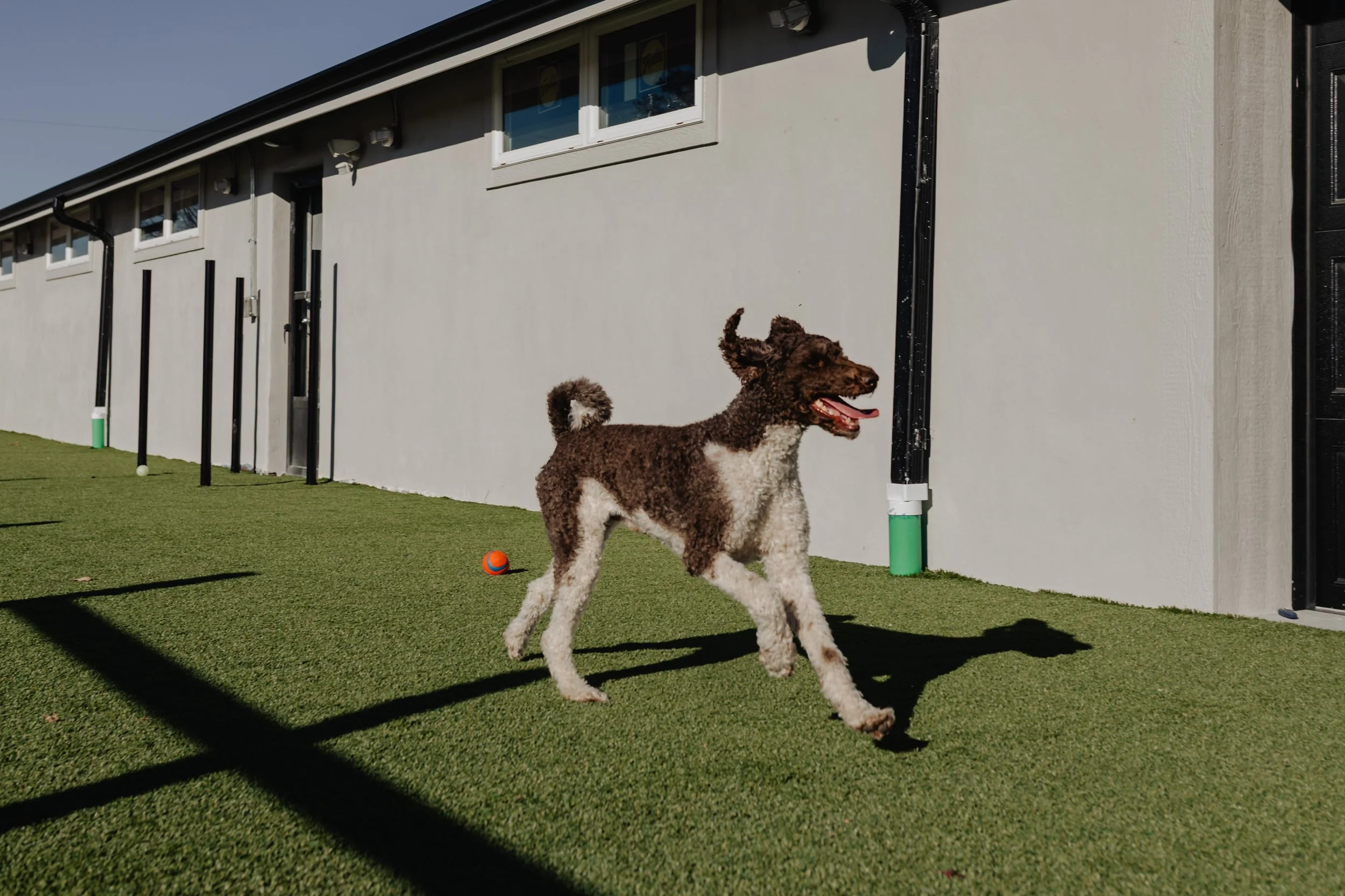
Our daycare program offers a full day of fun for your furry friend. Dogs enjoy social time, supervised play and structured rest in our spacious indoor and outdoor areas.
Per day: $40
10-Day pass: $360
20-Day pass: $680

How Our Dog Daycare Works
Safe, Structured, Tail-wagging Fun.
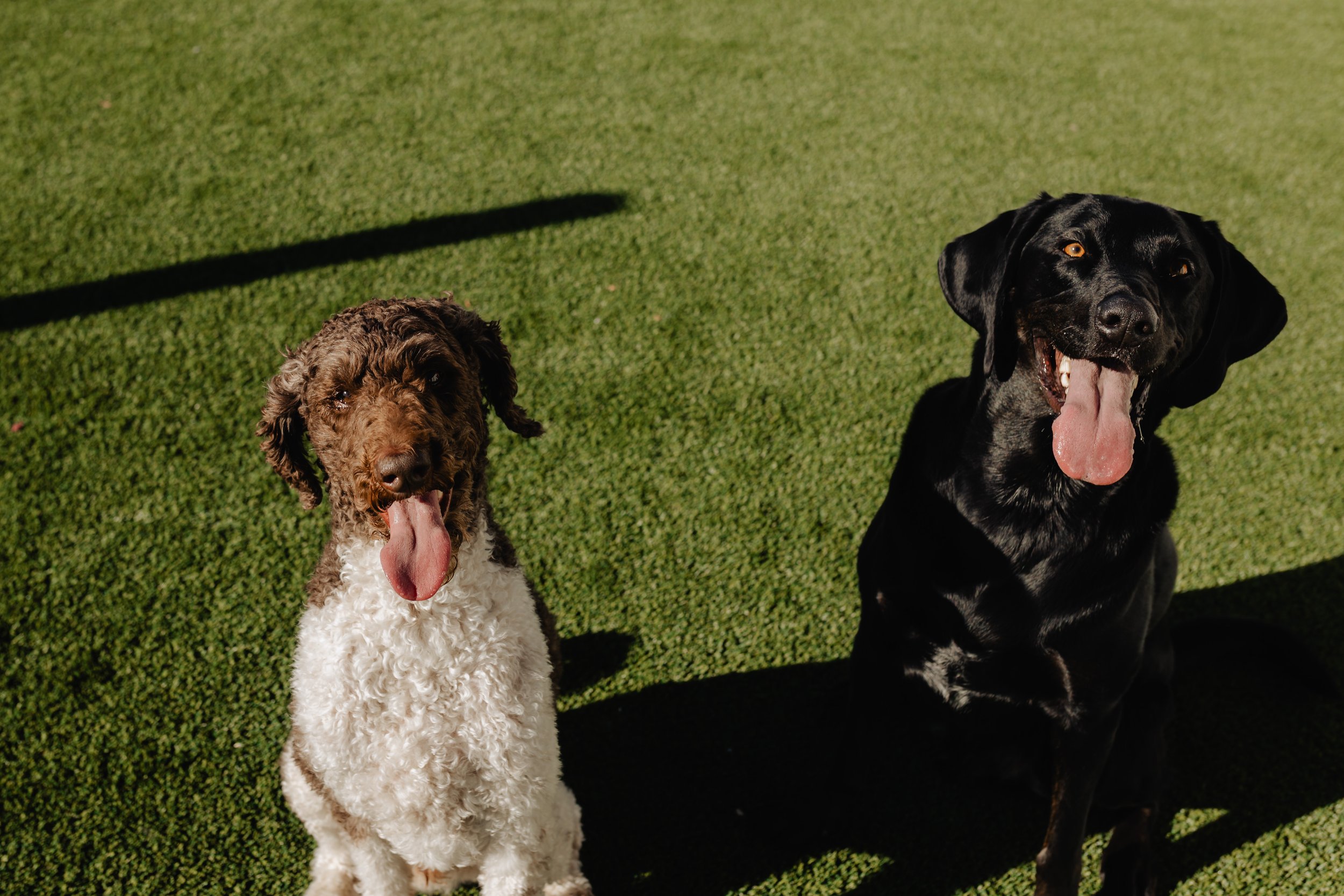
Our daycare program is intentionally structured—much like a school—to help dogs feel confident, balanced and socially successful.
Please note: All dogs must first complete a trial day to ensure they’re compatible and feel comfortable in our environment. Trial days are a one-time $20 fee.
Other Benefits
-
Our day is thoughtfully crafted to support both fun and emotional regulation.
A typical daycare day includes:
Warm-up time during dropoff
Guided group play sessions
Scheduled rest periods
Enrichment activities (sniff walks, puzzles, brain games, etc.)
Afternoon play
Calming transition before pickup
This rhythm helps dogs enjoy a healthy balance of play, learning, and rest.
-
Dogs thrive when surrounded by familiar friends. We create consistent groups based on:
Age
Size
Play style
Energy level
Personality
Social skill level
This stability allows dogs to:
Build friendships
Understand group dynamics
Reduce stress and overstimulation
Improve communication skills
Rotations happen only when beneficial for safety or enrichment.
-
Our trained team acts like the teachers of the play yard—coaching dogs, redirecting when needed, and supporting healthy interactions.
We monitor:
Proper social skills
Safe play styles
Respectful boundaries
Dog-to-dog communication
Overexcitement or bullying
-
Daycare supports more than energy release. It helps dogs:
Build confidence
Learn impulse control
Practice polite play
Strengthen communication
Adapt to new situations with resilience
Our structured approach helps create well-rounded, socially skilled dogs.
-
Rest helps dogs process social interactions, regulate excitement, and avoid injury. Every dog receives scheduled downtime in a cozy rest area.

Two-Week Incubation Policy
To protect the health of all our guests, dogs who have visited another boarding facility, daycare, groomer, or dog park are required to observe a 14-day waiting period before entering Bed & Biscuit.
This policy helps reduce the risk of illness transmission and ensures a safer environment for every dog in our care.
Dog Daycare Expectations
Daycare includes group socialization and play, so dogs must be comfortable engaging with others safely.
-
Adjusts to new environments without extreme stress
Recovers well after separation from their owner
-
Enjoys interacting with both dogs and people
Demonstrates polite greetings and healthy play
-
Responds to staff redirection
Plays appropriately without excessive jumping, nipping or mounting
Respects personal space and boundaries
-
Shares toys, water and attention without guarding
-
Settles calmly during rest breaks
Shows minimal stress behaviors while kenneled

Daycare & Group Play Guidelines
To ensure safety, fun, and harmony among all dogs in our care, every pet in group play must follow these guidelines.
-
Dogs are grouped by size, age, energy level, and play style to reduce mismatches.
Groups are kept to manageable sizes so staff can supervise well.
Dogs may be moved between groups if their behavior or energy changes.
-
Dogs must be non-aggressive and should not show signs of repeated growling, biting, or other threatening behavior.
Dogs should not be overly barking, harassing other dogs, or being a nuisance.
Dogs should be comfortable interacting with people and other dogs; overly fearful or antisocial dogs may not be a fit for group play.
-
Staff continuously monitor group play, ready to intervene when necessary.
Scheduled rest / quiet periods are built in to avoid overstimulation or fatigue.
Play sessions are structured with breaks and rotation so dogs don’t overdo it.
-
Dogs may be removed from group play if they show signs of aggression, persistent harassment, or unsafe behavior.
Reassessment may be required before returning to group play.
Dogs that cannot fit into a group safely may be offered solo play, separate supervision, or excluded from group play entirely.